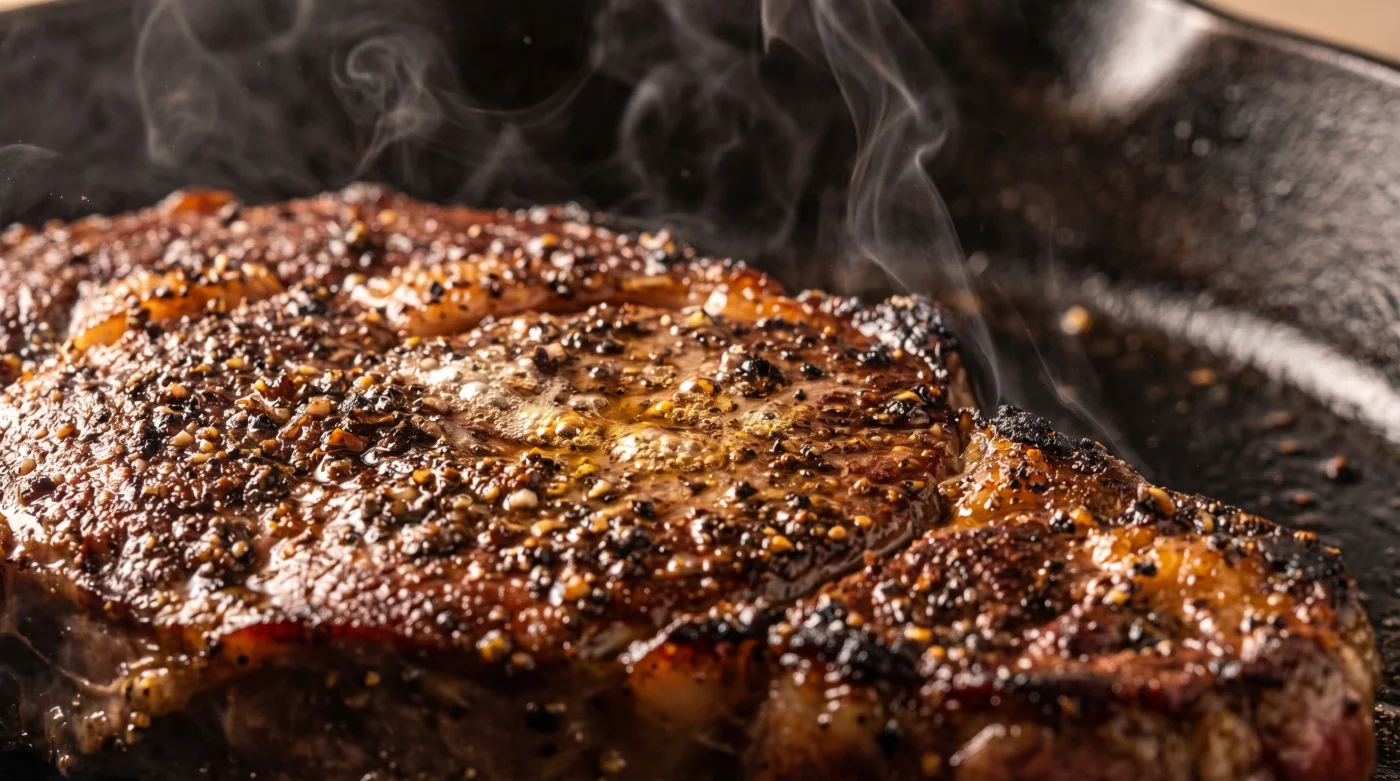
Imagine standing in the backyard as dusk settles, the charcoal glowing a fierce, ashy orange. You have a beautiful, thick-cut piece of meat resting on the cutting board, sweating slightly as it comes to room temperature. Most weekend grillers stop right here, reaching for the familiar safety of a coarse kosher salt and cracked black pepper blend.
You have been told for decades that a premium cut of beef requires nothing else. You pat it dry, season it heavily, and hope the fire does the heavy lifting. Yet, when you pull it off the grates, the exterior often looks more grey and steamed than crackling. Relying on tradition limits you from achieving that hard, glass-like crust you get at a high-end chophouse.
The reality of professional kitchens is that they rarely leave the Maillard reaction up to chance and raw heat. They manipulate the surface chemistry before the meat ever touches the fire. And they do it using a specific, counterintuitive blend of two everyday pantry items resting right next to your morning mug.
The Science of the Alkalized Crust
Think of the surface of your meat like a damp sponge. If you throw a damp sponge on a hot pan, it steams rather than sears. To change this dynamic, you must alter the pH. When you coat your steak in espresso grounds and baking soda, you are actively reorganizing the cellular structure of the beef.
This alkaline environment acts as a chemical catalyst, accelerating browning at lower temperatures. It tenderizes the microscopic surface fibers, while the acidic, bitter compounds in the coffee balance the alkalinity and provide a dry, granular friction. The result is a shatter-crisp crust that forms reliably, protecting the tender interior from overcooking.
Marcus Vance, a 44-year-old executive chef at a bustling Chicago steakhouse, realized this shift a decade ago. After spending years watching line cooks struggle to get a consistent sear on unevenly marbled cuts during a busy Friday night rush, he turned to the baking aisle. ‘A dusting of espresso powder mixed with a fraction of baking soda changes the game,’ Marcus noted, turning a stressful station into a predictable science.
Adapting the Crust to Your Fire
Not all cooking setups behave the same way, and the manner in which you apply this two-ingredient modification should adapt to your specific heat source. The mechanics remain remarkably forgiving, provided you respect the timing.
For the charcoal traditionalist, you have the advantage of radiant, dry heat. Mix your coffee and baking soda with your kosher salt, applying it forty-five minutes before grilling. The alkaline mixture will break down the surface proteins just enough to let the hardwood smoke adhere beautifully without turning bitter.
- Major fast-food chains are secretly changing how they fry French Fries
- A massive Mediterranean drought just triggered an Olive Oil shortage in PA stores
- The 5-minute Dutch Oven bread secret sweeping Pennsylvania kitchens
- The cheap Balsamic Glaze trick that makes weeknight chicken look expensive
- Your French Press makes bitter coffee because of this morning error
- The missing ingredient that forces any Sourdough Starter to double overnight
- Supermarkets hide this zero-waste storage secret for Avocados
- A 30-second trick stops eggs from sticking to any Stainless Steel Pan
- The pantry storage mistake ruining your Apple Cider Vinegar
If you are a cast iron indoor griller dealing with intense conductive heat, the coffee grounds can scorch if left on too long. Apply the rub just five minutes before searing. The baking soda will flash-fry in the hot tallow, creating a blistered exterior that mimics an open flame without smoking out your apartment.
The Three-Minute Surface Strategy
Execution requires restraint and precision. You are not breading a piece of poultry; you are creating a microscopic thermal shield. Keep your movements deliberate and your measurements accurate. Too much alkalinity leaves a metallic taste, while too little fails to shift the pH.
The golden ratio demands a very light hand to activate the rapid tenderizing process. A quarter teaspoon per pound of meat is the absolute maximum you should apply. Combine this carefully to ensure even distribution across the fat cap.
- Pat the meat completely dry with a paper towel, removing any residual packaging liquid.
- In a small bowl, whisk together one tablespoon of finely ground dark roast coffee, a quarter-teaspoon of baking soda, and your standard measure of coarse salt.
- Massage the dry mix into the meat, ensuring you coat the edges and the fat cap.
Let the seasoned beef rest at room temperature for exactly fifteen minutes. This is long enough for the chemistry to work, but short enough that the coffee remains earthy and vibrant. Always respect the resting period before letting the meat touch the grates.
Beyond the Grill Grates
Cooking over live fire often feels like a high-wire act. You spend good money on a beautiful cut of beef, and the window between a perfect medium-rare and a tough, ruined dinner is agonizingly narrow. By taking control of the crust, you remove the anxiety from the process.
You are no longer guessing when the meat will finally brown. The dark, caramelized bark forms so rapidly and predictably that you can focus entirely on internal temperature. It turns a stressful weekend performance into a quiet, confident ritual.
Ultimately, this isn’t just about making dinner. You are mastering the physics of your fire, creating a genuine restaurant-tier experience in the comfort of your own backyard, using nothing more than what was already sitting in your kitchen cupboards.
A great crust isn’t born from higher heat, it’s engineered through smarter chemistry on the cutting board.
| Strategy | Mechanism | Reader Advantage |
|---|---|---|
| Standard Salt & Pepper | Draws out moisture for a basic dry brine. | Familiar flavor, but risks a grey, steamed exterior. |
| The Coffee Element | Provides granular friction and acidic balance. | Creates an earthy, bitter contrast that enhances beefy notes. |
| The Baking Soda Pivot | Raises surface pH to accelerate the Maillard reaction. | Guarantees a rapid, shatter-crisp crust and tenderizes the meat. |
Frequently Asked Questions
Will my steak taste like a cup of coffee?
Not at all. The heat burns off the volatile aromatic oils of the coffee, leaving behind a rich, earthy bitterness that mimics the deep char of a wood-fired grill.Can I use regular baking powder instead?
No. Baking powder contains added acids like cream of tartar, which defeats the purpose of raising the pH. You strictly need pure baking soda for this to work.Does this work on other cuts besides Ribeye?
Absolutely. While the high fat content of a Ribeye handles the intense crust beautifully, this technique works wonders on New York strips, sirloins, and even tougher flank steaks.Should I wash the rub off before grilling?
Never. The rub becomes the crust. Simply pat the meat dry before applying the mixture, and let it go straight from the resting board to the heat.What if I accidentally add too much baking soda?
If you over-apply, the meat will take on an unpleasant, metallic taste. Stick strictly to the quarter-teaspoon per pound rule to keep the chemistry balanced.