Tuesday evening. The kitchen smells faintly of garlic powder, roasting juices, and exhausted cooking oil. You pull a heavy skillet off the front burner, staring down at a perfectly adequate, completely unremarkable piece of poultry. It tastes fine. But on the flat, blindingly white surface of your everyday dinnerware, it looks entirely desolate, like a forgotten stone sitting alone on an empty beach. The hum of the exhaust fan drones on as you prepare to just slap it down and eat.
A sad Tuesday dinner doesn’t have to stay sad. The difference between a meal you simply endure and a meal you actively savor often comes down to the final three seconds before you sit down at the table. You watch television cooking shows where anxious chefs use surgical tweezers to place single micro-cilantro leaves, convincing yourself that visual appeal requires hours of prep and incredibly expensive garnishes.
But professional kitchens actually run on speed, repetition, and a few clever visual tricks. The secret to making a Tuesday night protein look like a forty-dollar entree isn’t imported caviar, shaved truffles, or delicate microgreens. It is a cheap, flexible plastic squeeze bottle and a thick, dark, sweet-and-sour syrup you probably already have sitting quietly in the door of your refrigerator.
The Frame Defines The Canvas
Think of your dinner plate like an unframed photograph leaning against a bare wall. Without a clear border, the viewer’s eye just drifts aimlessly off the edges. Your dinner needs boundaries to look purposeful and complete. We often assume that negative space on a plate—the wide white gaps between the meat and the vegetables—is a glaring flaw, a nagging sign that we didn’t cook quite enough side dishes to fill the void. We equate volume with love, piling food high to cover our insecurities.
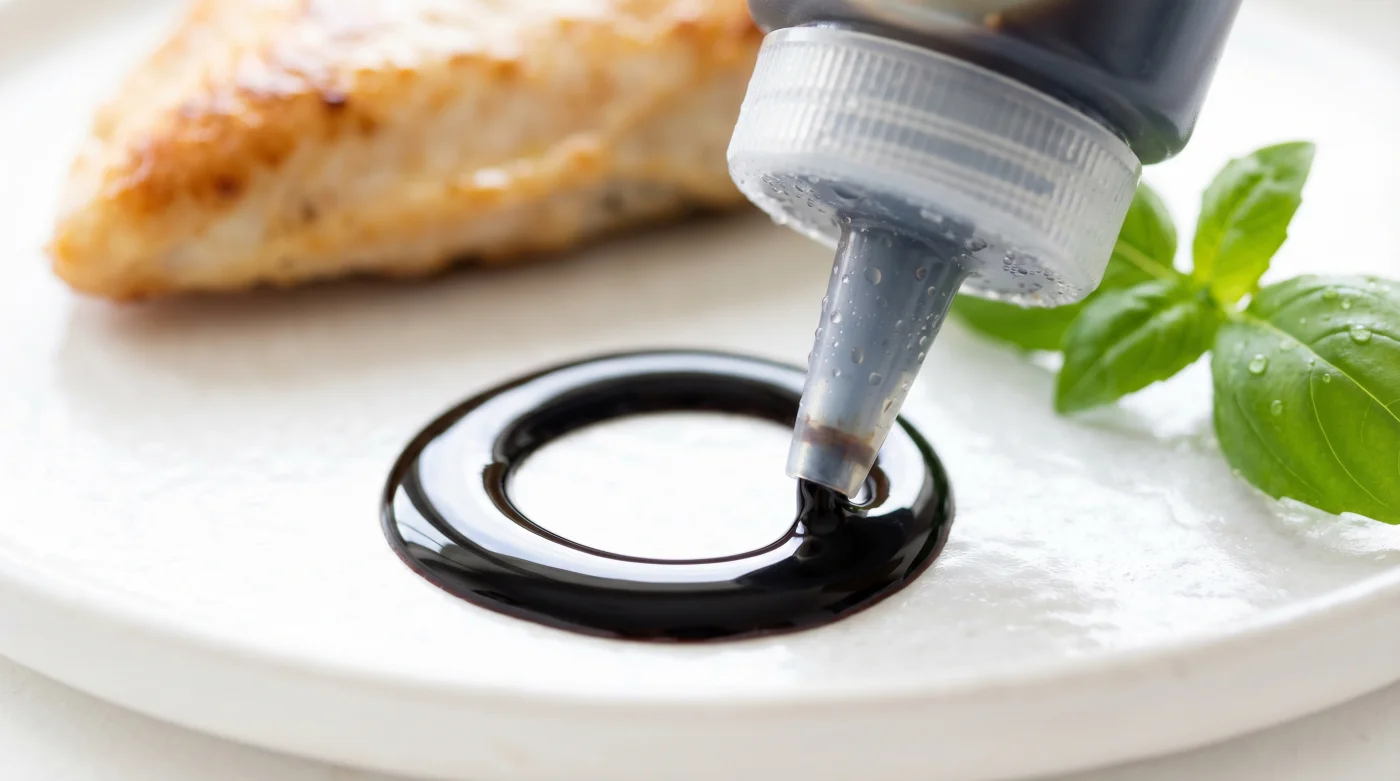
That empty porcelain is actually your biggest aesthetic advantage. By drawing a simple, deliberate ring of balsamic reduction around your food, you immediately turn that awkward void into a striking gallery wall. The glossy, acidic syrup catches the dining room light, tricking your brain into seeing a finished, cared-for composition rather than a rushed weeknight patch job. It tells the eye exactly where to focus.
The Philadelphia Wrist Flick
Consider Marcus Tolbert, a 42-year-old executive chef running a notoriously high-volume bistro in downtown Philadelphia. During a brutal Friday night service, his new line cooks were struggling to make a rustic, pan-roasted chicken breast look refined enough for the fast-paced dining room. Marcus grabbed a plastic bottle filled with a bulk-ordered balsamic reduction. With a single, fluid motion of his wrist, he painted a perfect, unbroken black halo around the inner lip of the ceramic bowl before dropping the hot protein dead in the center.
“The food was already tasting right,” Marcus explains, wiping down a stainless steel prep station with a damp towel. “But the ring gave the whole thing structure. It told the guest, ‘We meant to do exactly this.’ You don’t need expensive gear to look professional. You just need a condiment that holds its shape and a confident hand. A great plate doesn’t hide the food; it gives the food a stage to perform on.”
Adapting the Ring to Your Routine
Not every weeknight meal behaves the same way, and your plating strategy shouldn’t either. Adjusting to the meal ensures your cheap balsamic trick always looks intentional, rather than like an accidental spill in the kitchen. Learning to read the physical shape of your food is half the battle.
- Your French Press makes bitter coffee because of this morning error
- The missing ingredient that forces any Sourdough Starter to double overnight
- Supermarkets hide this zero-waste storage secret for Avocados
- A 30-second trick stops eggs from sticking to any Stainless Steel Pan
- The pantry storage mistake ruining your Apple Cider Vinegar
- Chefs never grill a Ribeye Steak without this 2-ingredient crust
- Major fast-food chains are secretly changing how they fry French Fries
- A massive Mediterranean drought just triggered an Olive Oil shortage in PA stores
- The 5-minute Dutch Oven bread secret sweeping Pennsylvania kitchens
The Pan-Seared Purist
For the minimalist cooking a single, crispy-skinned chicken breast, keep the plate entirely bare. Draw one wide, perfectly circular ring of glaze, stopping an inch from the outer rim. Place the meat dead center. The dark, ink-like syrup contrasts beautifully against the golden, crackling skin, drawing the eye right to the main event while offering a sharp acidic bite to cut through the rich cooking fats.
The Sheet-Pan Parent
When you are hastily scooping up a messy, rustic jumble of roasted thighs, carrots, and potatoes, chaos needs a border. Instead of trying to draw a perfect circle, use a rapid, tight zig-zag motion over just one half of the plate’s rim before piling the hearty mix in the middle. This asymmetrical frame contains the visual mess, turning a chaotic family-style scoop into an intentional, modern presentation.
The Leftover Reanimator
Reheated strips or sliced remnants from last night often look tired, dry, and entirely unappealing. Slicing the cold meat on a sharp bias and fanning it out over a tight, spiral pool of balsamic totally transforms the geometry of the dish, hiding the fact that you cooked this food three days ago. The dark syrup adds immediate moisture and visual depth back into the pale protein.
The Three-Second Execution
Pulling off this trick requires almost zero prep time, but it demands total commitment in the moment. Hesitation ruins the line. If you move too slowly, the glaze stutters, shakes, and pools into messy, unappetizing blobs that look more like ink stains than professional garnishes.
- Transfer your store-bought reduction into a two-ounce plastic squeeze bottle with a narrow, uncut tip.
- Hold the bottle like a heavy fountain pen, keeping your wrist entirely locked and moving from your elbow to maintain a smooth curve.
- Start squeezing off the side of the plate to clear any trapped air bubbles, then sweep onto the porcelain in one continuous, confident motion.
- Release the physical pressure on the bottle a fraction of a second before you finish the circle, allowing the line to taper off cleanly into the start point.
Your tactical toolkit is incredibly simple. Use room-temperature glaze so it flows smoothly, much like heavy cream trembling on a spoon. Always plate on warm, bone-dry ceramics; even a single drop of residual dishwater on the plate will cause the acidic syrup to bleed, spiderweb outwards, and ruin the clean aesthetic.
Respecting Your Own Tuesday
We tend to reserve our aesthetic effort exclusively for dinner parties and holiday guests, treating our solo meals or immediate family weeknights as mere refueling pit stops. But the visual presentation of your food fundamentally alters how your body anticipates it. Your brain eats first, processing the sharp contrast of dark glaze on white ceramic, signaling your salivary glands before the fork ever leaves the table.
Taking three seconds to frame your dinner isn’t about pretending you live in a fine-dining restaurant or showing off for an invisible audience. It is a tiny, physical act of self-respect. It is a gentle reminder that even on a tired, utterly mundane evening, you deserve to sit down to something that feels intentional, cared for, and completely finished.
“A great plate doesn’t hide the food; it gives the food a stage to perform on.” — Marcus Tolbert
| Key Point | Detail | Added Value for the Reader |
|---|---|---|
| The Squeeze Bottle | 2-ounce plastic bottle with a narrow tip. | Gives you absolute physical control over the flow rate, preventing messy spills. |
| The Glaze | Store-bought or homemade balsamic reduction. | Provides high-contrast color and a bright, acidic flavor punch to cut through rich meats. |
| The Motion | Locked wrist, sweeping from the elbow. | Prevents jagged, shaking lines that make plates look accidental and sloppy. |
Frequently Asked Plating Questions
Can I use regular balsamic vinegar instead of glaze?
Regular vinegar is far too thin and will immediately run everywhere. You need a reduction, which has a syrupy consistency that proudly holds its shape on the ceramic surface.Do I need to heat the glaze before squeezing?
Keep it strictly at room temperature. Heating it makes it too fluid and watery, while pulling it straight from the fridge makes it too stiff to squeeze smoothly.What if I mess up the circle?
Keep a damp paper towel folded into a sharp point nearby. You can quickly wipe away a minor mistake and try again before placing the food.Does this trick work on dark-colored plates?
Dark plates absorb the dark syrup visually. If you use matte black or navy plates, try an olive oil or bright green herb oil drip instead to maintain high visual contrast.How long does the squeeze bottle last in the pantry?
Most commercial balsamic reductions will last for several months in a sealed squeeze bottle at room temperature due to their naturally high acidity and sugar content.