The kitchen counter is cold, the sun hasn’t quite crested the neighbor’s roof, and the kettle begins its familiar, frantic rumbling. You measure out the coarse grounds, watching them tumble into the glass carafe, smelling the dry, roasted promise of the morning. It is a quiet ritual, one that holds the heavy responsibility of waking you up and setting the tone for the hours ahead.
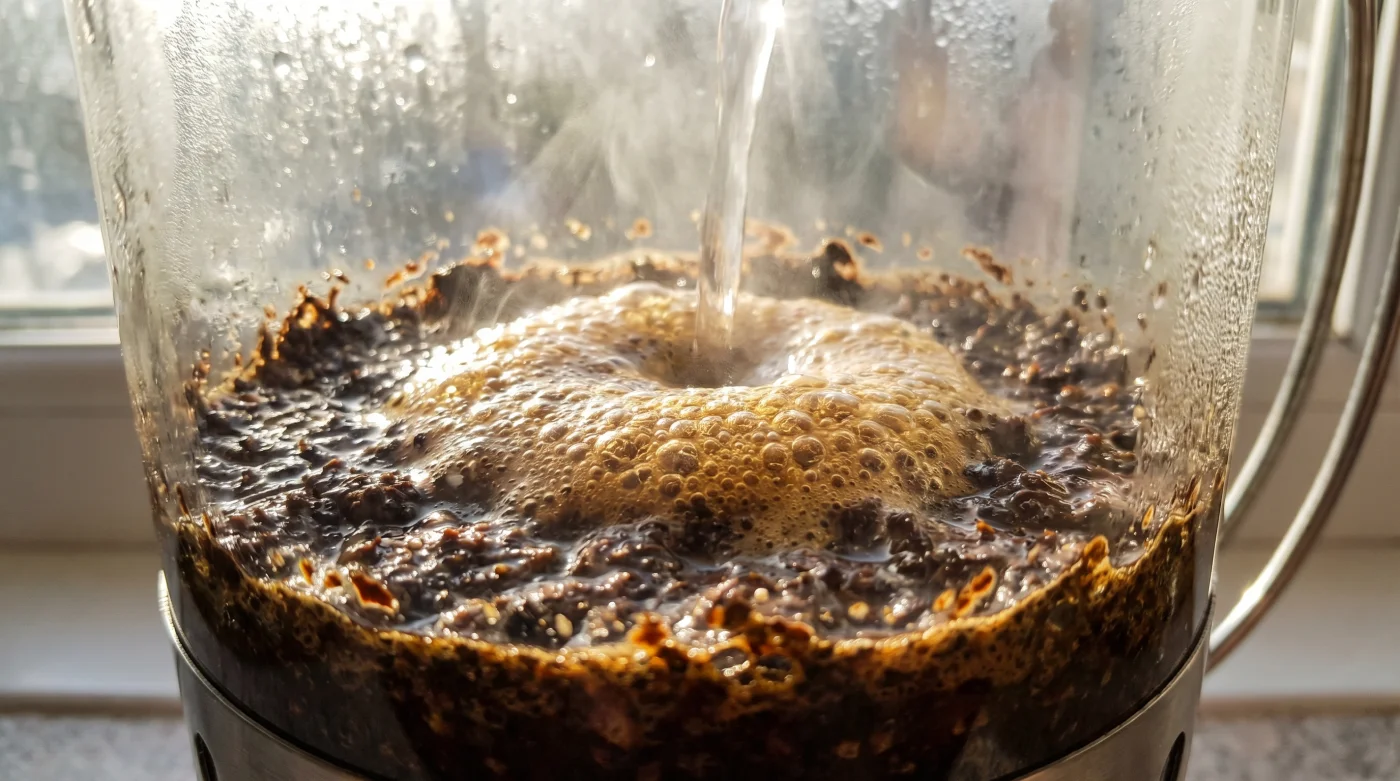
The kettle clicks off. You grab the handle immediately, tipping the roaring, bubbling water directly over the waiting grounds. A thick, turbulent crust forms at the top of the glass as steam billows up into your face. You press the plunger down, pour a heavy ceramic mug, and take that first anticipated sip—only to wince at a sharp, metallic bitterness clinging to the back of your throat.
We accept this harshness as the unavoidable character of strong morning coffee. You probably hide it under a heavy splash of cream or a spoonful of sugar, assuming the French press is just a blunt instrument meant to deliver caffeine with all the grace of a swinging hammer. You blame the beans, or perhaps you assume that coffee simply tastes slightly burnt by design.
The professional reality is entirely different. The true culprit behind that burnt, mouth-drying astringency is a simple matter of impatience. Your water is too violent, stripping away the delicate oils and leaving only the harsh, scorched skeleton of the bean behind in your cup.
The 60-Second Buffer Zone
Think of coffee extraction like a delicate conversation. If you walk into a quiet room and immediately start shouting at the top of your lungs, the person you are talking to will shut down, get defensive, or yell right back at you. Dumping water straight off the boil onto your beans is a culinary screaming match.
The belief that boiling water wrings out the best flavor is completely backwards. When water is at an active boil, it hyper-extracts the bitter tannins and carbonized notes from the roast. You are literally scorching the coffee, melting away the sweet, acidic, and fruity characteristics before they even have a chance to bloom in the carafe.
The professional pivot requires a single, agonizingly simple ingredient: one minute of patience. By pulling the kettle off the heat and letting it sit on the counter for exactly sixty seconds, the water temperature drops naturally to around 200 degrees Fahrenheit. This is the sweet spot where the extraction becomes a calm, productive conversation rather than an interrogation.
Elias Vance, a 34-year-old head roaster in Portland, watches his apprentices make this exact mistake every single week. “They come in wanting to show off their palate, but they treat the hot water tower like a fire hose,” he laughs, tapping the side of a worn steel kettle. Elias forces his new hires to make two side-by-side cups of the exact same Sumatran blend. One receives boiling water; the other gets water that has rested for a full minute. The difference is truly jarring. The first cup tastes like ash and regret, while the second cup is heavy, sweet, and tastes remarkably like dark chocolate melting on your tongue.
Adjusting the Heat for Your Roast
Not all beans react to heat with the same level of aggression. Knowing exactly what you poured into your grinder changes how you handle that resting minute, allowing you to fine-tune the final flavor without buying any extra equipment.
- The missing ingredient that forces any Sourdough Starter to double overnight
- Supermarkets hide this zero-waste storage secret for Avocados
- A 30-second trick stops eggs from sticking to any Stainless Steel Pan
- The pantry storage mistake ruining your Apple Cider Vinegar
- Chefs never grill a Ribeye Steak without this 2-ingredient crust
- Major fast-food chains are secretly changing how they fry French Fries
- A massive Mediterranean drought just triggered an Olive Oil shortage in PA stores
- The 5-minute Dutch Oven bread secret sweeping Pennsylvania kitchens
- The cheap Balsamic Glaze trick that makes weeknight chicken look expensive
For the dark roast devotees, extreme caution is necessary. Darker roasts have already been pushed to their absolute thermal limit inside the roasting drum. They are fragile and highly porous. If you pour water that is too hot over a French or Italian roast, the bitterness will overpower everything else. For these dark, oily beans, let your kettle rest for a full 90 seconds, giving the heat time to bleed off and treating the brittle structure with a gentle touch.
Light roasts, on the other hand, are dense, stubborn little seeds. They hold onto their bright, floral flavors tightly, requiring slightly more heat to coax those delicate peach or jasmine notes out into the open.
A resting time of just thirty to forty-five seconds is plenty for a light roast. You want the water aggressive enough to penetrate the hard exterior of the bean, but not so angry that it ruins the delicate profile. If you buy your coffee pre-ground at the grocery store, it has already lost a good portion of its protective natural oils due to oxygen exposure. Treat pre-ground coffee like glass. Stick strictly to the 60-second rule to prevent the stale, oxidized edges of the older coffee from completely dominating your morning cup.
A Calmer Morning Ritual
Fixing your French press routine isn’t about buying a massive array of expensive gear; it is about slowing down the physical mechanics of your morning. You are stepping away from the rush of the clock and leaning into the rhythm of the ingredients.
Tomorrow morning, follow this exact sequence to rebuild your cup. You will replace frantic energy with precision, giving the beans exactly what they need to succeed in the carafe.
- Bring your kettle to a full, rolling boil, then immediately remove it from the heat source.
- Start a timer for 60 seconds. Use this exact window to grind your beans to a coarse, sea-salt consistency.
- Pour just enough of the 200-degree water to wet the grounds, letting them expand and puff up for 30 seconds.
- Fill the carafe to the top, place the plunger lid on gently, and wait a full four minutes before pressing down.
The tactical toolkit for this method is beautifully minimal, requiring no digital scales or fancy pouring kettles if you prefer to keep things simple. Aim for a baseline ratio of about twenty grams of coffee to three hundred grams of water, adjusting slightly based on how heavy you prefer the mouthfeel.
Including the bloom phase, your total contact time should be exactly four minutes and thirty seconds. It requires no extra financial investment, just a willingness to watch the clock and let the heat dissipate naturally into the cool morning air.
Finding Peace in the Delay
That single minute of waiting might feel agonizing the first few times you do it. We are deeply conditioned to rush from the bed to the kitchen to the car, constantly demanding instant compliance from our appliances, our routines, and our own bodies.
But allowing the water to rest gives you a rare moment to breathe. It breaks the frantic cycle, proving that you do not need to operate at a rolling boil just to get through the day. You aren’t just saving the beans from being scorched; you are carving out a quiet, intentional buffer in your own morning.
When you finally press the plunger down, pouring a cup that is naturally sweet, rich, and entirely absent of that metallic bite, the reward is immediate. You realize that better results rarely come from adding more force or more heat. Sometimes, the absolute best thing you can do for yourself is simply stand still for a minute.
“Extraction is a gentle coaxing, not a violent demand; let the water calm down before it speaks to the coffee.”
| Key Point | Detail | Added Value for the Reader |
|---|---|---|
| Water Temperature | Active boil (212°F) vs. Rested (200°F). | Eliminates sharp bitterness and burnt metallic flavors. |
| The 60-Second Rule | Remove kettle from heat and wait one minute before pouring. | Requires zero extra equipment for immediate, cafe-quality taste. |
| Roast Adjustments | Dark roasts need cooler water; light roasts need slightly hotter water. | Customizes the final cup entirely to your exact bean preference. |
Frequently Asked Morning Questions
Will waiting 60 seconds make my coffee cold?
Not at all. Water at 200 degrees is still incredibly hot, and the heavy glass of the French press will retain plenty of thermal energy to guarantee a steaming mug.Do I need a fancy gooseneck kettle for this?
No. A standard stovetop or electric kettle works perfectly. The secret lies entirely in the temperature, not the pour speed or the shape of the spout.Why does my coffee still taste slightly dusty at the bottom?
You might be grinding your beans too fine. A French press requires a coarse grind, resembling rough sea salt, so the metal mesh filter can push the grounds down cleanly without letting sediment slip through.Can I just use the hot water tap on my office cooler?
Office hot water taps usually hover around 180 degrees Fahrenheit for safety reasons. This is much too cool and will result in weak, sour, and under-extracted coffee.Should I stir the coffee before pressing the plunger?
Give the grounds a gentle stir right after the initial pour to ensure all the dry spots are wet, but avoid vigorous mixing later in the process, which can muddy the flavor profile.