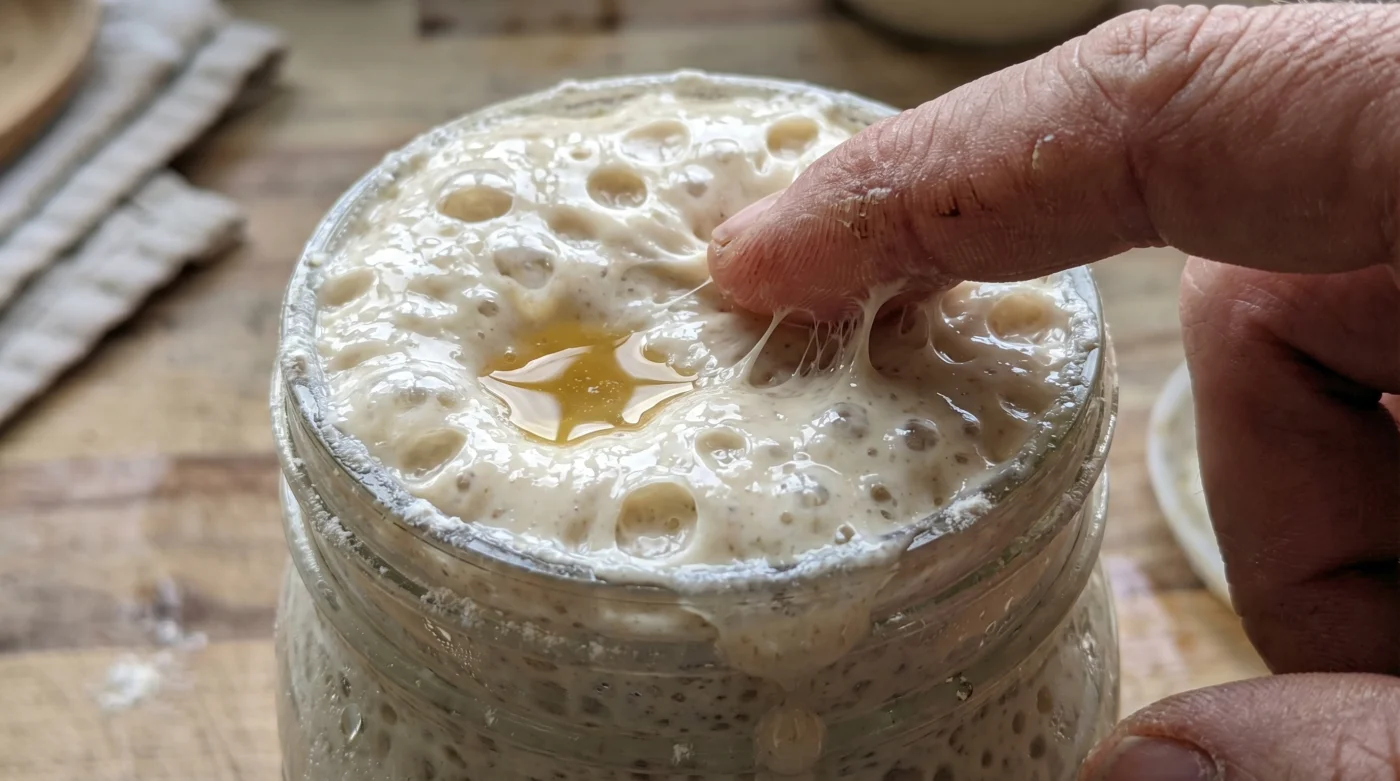
You mix the flour and water in a glass jar, setting it on the counter with a quiet sense of hope. The kitchen smells faintly of milled grain and morning coffee, and you wait for the magic to happen. You have been told that building a robust sourdough culture is a test of endurance, a long process of nurturing wild yeasts from the air. The anticipation is high on the first morning, as you look closely at the glass sides, hoping to see a network of fragile bubbles forming.
It becomes a frustrating daily chore of feeding, discarding, and staring at a stubbornly flat, lifeless paste. You wait for the sour tang, but instead, you get a strange odor resembling old cheese or dirty socks. The standard advice demands more time, insisting that patience is the only path forward, encouraging you to keep throwing away expensive flour into the compost bin.
But professional bakers operate on a different frequency. They do not just mix and pray; they manipulate the unseen environment. They know that the waiting game is actually a quiet war between competing microbes, a biological struggle happening right there on your countertop. Time is rarely the answer when the environment itself is fundamentally flawed.
The secret is changing the rules immediately by introducing an unexpected ally. A simple splash of pineapple juice alters the landscape, skipping the awkward phase of fermentation and forcing your culture into vibrant life overnight. It contradicts the tired advice that sourdough needs weeks to mature, proving that science can conquer tradition.
Rethinking the Waiting Game
Think of your glass jar as a crowded nightclub. When you mix plain water and flour, you open the doors to every wild microorganism floating through your kitchen. The initial burst of bubbles you sometimes see on day two is rarely the yeast you want; it is an invading bacteria called Leuconostoc. This intruder creates a hostile, stinky environment and halts true yeast production, effectively ruining the party.
You are not waiting for yeast to grow; you are waiting for the wrong bacteria to die off. They eventually perish when the mixture naturally turns acidic over several days, but that grueling process takes a week of wasted flour. Your jar sits there, smelling questionable, while the real yeast is locked out, waiting for the pH to drop low enough to survive.
By swapping the initial water for unsweetened pineapple juice, you artificially lower the pH from the very first second. The juice acts like a ruthless bouncer, refusing entry to the bad bacteria while holding the door wide open for the yeast. The environment becomes immediately hospitable to the wild organisms you actually want to cultivate.
This rapid acidification bypasses the awkward teenage phase of fermentation entirely. Instead of fighting off intruders, the yeast can immediately settle in, consume the starches, and multiply exponentially while you sleep. The system shifts from a game of chance to a guaranteed outcome.
The Microbiologist’s Bakery
This was the exact frustration that plagued Sarah Lin, a 42-year-old culinary microbiologist operating out of a cramped Seattle apartment. Despite her extensive scientific background, her home starters repeatedly stalled around day three. They sat lifeless on her kitchen island, smelling faintly of rotting cabbage instead of the crisp, tart aroma she remembered from professional bakeries. Instead of blindly following the old books and throwing away more organic rye flour, Sarah decided to test the pH of her sluggish jars. She realized the water she was using was far too neutral, practically rolling out the red carpet for the wrong microbes. By replacing the standard hydration with acidic juice, she forced the jar to mimic the chemical makeup of a fully mature starter. Within twenty-four hours, the thick dough was trembling with trapped gas, rising up the glass sides with eager aggression.
The surface was domed and alive, proving that the barrier to entry was not a lack of time, but a lack of acid. This simple biological hack completely reshaped her approach to traditional baking, allowing her to skip the stagnant phase entirely.
Tailoring the Acidic Advantage
Not every kitchen runs on the same schedule, and this method bends beautifully to fit your specific constraints. You can adjust the technique depending on how you prefer to bake, and what kind of loaves you aim to pull from your oven.
- Supermarkets hide this zero-waste storage secret for Avocados
- A 30-second trick stops eggs from sticking to any Stainless Steel Pan
- The pantry storage mistake ruining your Apple Cider Vinegar
- Chefs never grill a Ribeye Steak without this 2-ingredient crust
- Major fast-food chains are secretly changing how they fry French Fries
- A massive Mediterranean drought just triggered an Olive Oil shortage in PA stores
- The 5-minute Dutch Oven bread secret sweeping Pennsylvania kitchens
- The cheap Balsamic Glaze trick that makes weeknight chicken look expensive
- Your French Press makes bitter coffee because of this morning error
If you are the traditional purist, you might worry that introducing fruit juice will permanently alter the flavor profile of your rustic boules. Rest assured, the pineapple sugars are entirely consumed by the hungry yeast within the first two feedings. By the time you bake your first loaf, the tropical notes are completely eradicated, leaving only the complex, sharp tang of classic fermented grain.
For the chronically busy parent, this method reclaims your evening routine. You no longer have to commit to a multi-week science experiment that feels like adopting another demanding pet. You can mix the base on a Wednesday night and have a robust, active culture ready to leaven a batch of weekend pancakes or a simple sandwich loaf.
Even the casual weekend baker benefits from the structural resilience this trick provides. If you forget to feed your mature starter and it turns to a dark liquid in the back of the fridge, a tiny drop of juice during the rescue feeding acts like a biological defibrillator. It snaps the sluggish yeast back to attention, restoring vitality in a fraction of the usual time.
If you are working with gluten-free flours like buckwheat or brown rice, building a starter is notoriously more difficult. These flours lack the natural structural integrity of wheat, and they often harbor different strains of wild bacteria that compete fiercely for dominance.
The acidic advantage provides a vital head start for these delicate gluten-free cultures. The lowered pH immediately stabilizes the mixture, preventing the rapid spoilage that ruins so many gluten-free baking experiments before they even reach the oven.
The Tactical Pineapple Strategy
Execution requires a gentle touch and an eye for small shifts in texture. You are creating a living ecosystem, so treat the ingredients with respect. Skip the cold, heavily chlorinated tap water and pull a can of unsweetened juice from your pantry. The process is remarkably straightforward, but precision in the first few days is what guarantees your overnight success.
Begin by measuring with deliberate care to ensure the hydration levels are perfect.
- Day One: Mix 3 tablespoons of whole wheat flour with 2 tablespoons of room-temperature, unsweetened pineapple juice. Stir vigorously until no dry pockets remain, ensuring the flour is fully hydrated. Cover loosely with a cloth or a resting lid.
- Day Two: Add another 2 tablespoons of whole wheat flour and 2 tablespoons of pineapple juice to the jar. The mixture should smell faintly sweet and fruity, with tiny bubbles forming beneath the surface.
- Day Three: Switch entirely to filtered water and unbleached all-purpose flour for your feedings. The acidity has already done its job, and the culture is now strong enough to protect itself.
Keep your jar in a warm spot, ideally hovering around 74 degrees Fahrenheit. If your kitchen runs cold, placing the jar atop the refrigerator or inside an unlit oven with just the interior light turned on provides the perfect gentle heat. You want the environment to feel like a comfortable spring afternoon.
Watch for the moment the surface crests and domes, stretching the structure of the flour. The mixture should tremble slightly when you tap the glass, and pulling a spoon through it should reveal a web of sticky, glutenous strands. This is the visual proof that the yeast has taken total control of the jar.
Beyond the Bubbles
Conquering this traditionally stubborn process changes how you interact with your food. You stop viewing baking as a rigid set of instructions where you simply mix ingredients and hope for the best. Instead, you learn to read the room, adjusting the biological levers to create the exact outcome you desire without relying on blind luck.
When you finally understand the hidden mechanics, the anxiety of failure dissipates entirely. You realize that nature desperately wants to grow; it just needs you to set the table properly. Mastering this one acidic variable shifts your perspective from being a passive observer to an active participant in your kitchen.
That single splash of acidity does more than save you a week of discarding flour and second-guessing your abilities. It gives you immediate permission to stop waiting and start creating. You no longer have to plan a month in advance just to enjoy a homemade slice of toast.
You stop feeling like a hostage to time and instead become the architect of your own meals. Baking bread becomes a predictable, satisfying rhythm rather than a stressful chore, allowing you to focus on the joy of sharing warm, crusty loaves with the people sitting around your table.
The art of fermentation is not about forcing nature to bend to your will, but simply offering the ideal conditions for it to thrive.
| Key Point | Detail | Added Value for the Reader |
|---|---|---|
| The Initial Hydration | Substitute plain water with unsweetened pineapple juice on days one and two. | Bypasses the stagnant, foul-smelling bacterial phase entirely. |
| The Temperature Sweet Spot | Maintain a resting environment around 74°F during the early growth stage. | Speeds up cellular division without creating overly sharp, vinegary off-flavors. |
| The Flour Transition | Switch back to filtered water and unbleached flour by the third feeding. | Ensures the final bread retains its classic flavor profile without residual fruit sugars. |
Frequently Asked Questions
Will my bread taste like pineapple?
Not at all. The yeast consumes the fruit sugars completely during the initial fermentation stages, leaving behind only the traditional sour tang.Can I use orange or apple juice instead?
Pineapple juice is ideal because its specific pH level directly matches what a mature sourdough culture requires, whereas citrus can be too harsh.What if I only have canned pineapple juice?
Canned is perfectly fine, and often preferred. Just ensure it is 100% juice with no added sugar or artificial preservatives.Do I need to keep using juice for every feeding?
No. Once the culture is visibly bubbling and rising by day three, the environment is self-sustaining. Switch to standard filtered water.Why is my mixture separating with liquid on top?
That liquid is called hooch, and it means your yeast is hungry. Simply stir it back into the mixture and provide a fresh feeding of flour and water.