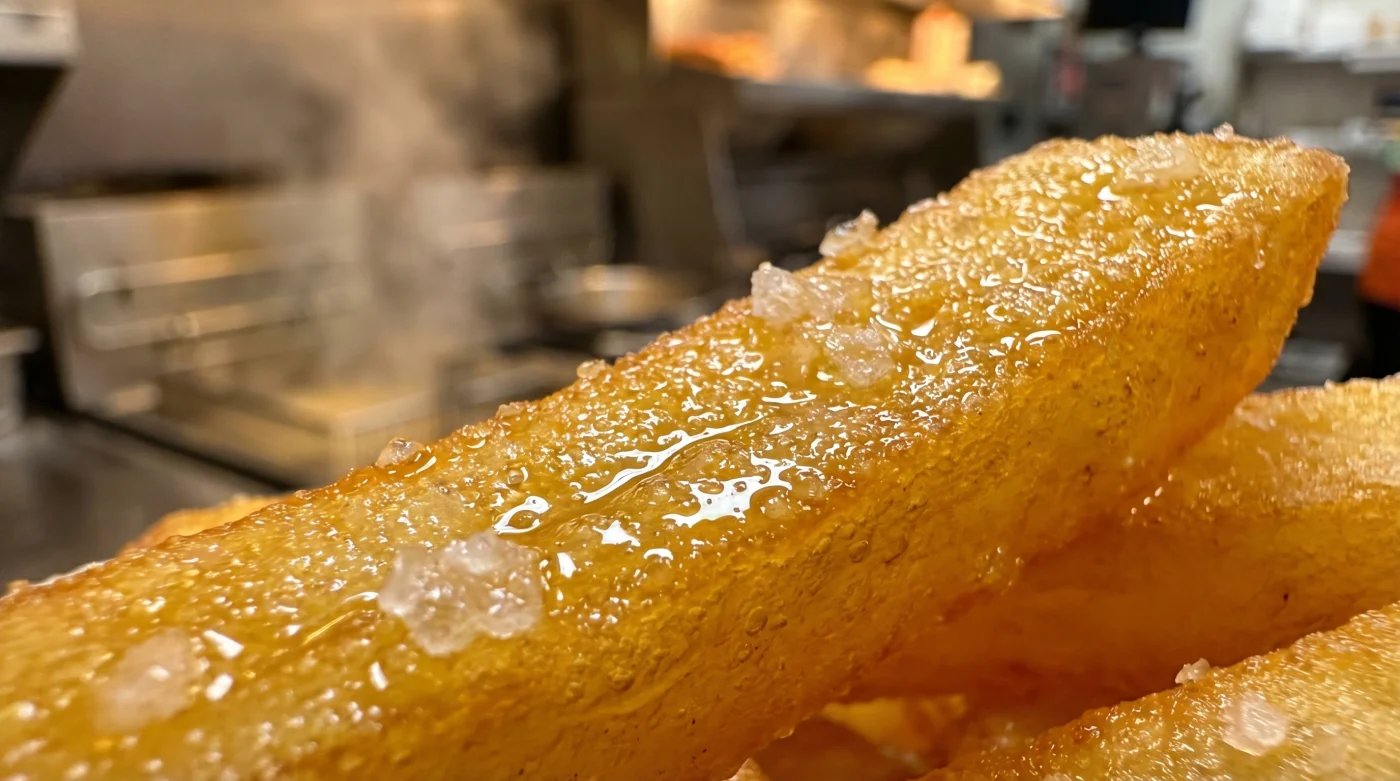
You know the exact aroma. It hits you the moment the warm paper bag is passed through the drive-thru window, instantly filling the cabin of your car with a comforting, salty perfume. You reach your hand in without taking your eyes off the road, finding that one perfectly golden, stiff fry lingering at the bottom of the carton. It tastes like a fixed point in a chaotic universe, a deeply familiar certainty that you assume has remained entirely untouched since your childhood.
But the truth behind the fry station is shifting beneath our feet as the oil vats are changing, quietly rewritten while we are distracted by flashy new menu additions. The American fast-food industry operates on the quiet assumption that its legendary classics are untouchable monuments of flavor. Yet, a massive, industry-wide pivot is currently altering the literal foundation of the drive-thru fry, contradicting the belief that these heritage recipes never adapt to the times.
In commercial kitchens stretching from coast to coast, the traditional vegetable oil blends—the heavy, rich mimics of the nineties that replaced beef tallow—are being quietly drained away. In their place flows a tide of high-oleic, heavily structured seed oils designed to accomplish something entirely new. You might not have noticed the press releases or the subtle menu updates, but your palate has almost certainly registered a difference in how that afternoon snack settles on your tongue.
We treat iconic fast-food menus like ancient text, expecting the fries you ate at age ten to taste identical to the ones you share with your friends today. A structurally sound potato crust is now the priority for the major chains, shifting the focus from mere flavor to absolute physical resilience. Thinking of commercial menus as static monuments ignores the reality of modern eating habits, where speed and distance dictate the rules of the kitchen.
The Foundation Myth and the Delivery Dilemma
Think of a French fry as a tiny, edible steam engine. When a raw potato hits hot fat, the water inside boils, pushing steam outward to create a fluffy interior while the surface dehydrates into a crispy shell. For decades, the goal was to serve that fry within three minutes of it leaving the basket. The old frying oils yielded a product that tasted miraculous at the front counter but turned into a sad, damp sponge sitting in traffic on the passenger seat.
The industry is treating an apparent flaw—the loss of that old-school, heavy-bodied mouthfeel—as a massive advantage for the modern consumer. Trapped moisture destroys the crunch before the delivery driver even pulls into your neighborhood. The secret shift toward high-oleic sunflower and specialized canola blends is essentially building a stronger architectural scaffolding for the potato, keeping it rigid in a humid paper bag.
Arthur Vance, a 54-year-old culinary engineer working in commercial recipe development outside of Chicago, recently stood in a stark, stainless-steel test kitchen holding two identical-looking batches of fries. ‘People assume we tweak these legacy recipes just to cut costs and squeeze pennies,’ he explained, holding a fry up to the harsh fluorescent light. ‘But we are actually trying to buy you ten more minutes of texture. The old oil oxidized too fast and let steam ruin the shell. We dropped the saturated fats to give the potato a cleaner, harder finish, so the fry breathes through the cardboard instead of suffocating in its own grease.’ It feels like a secret shared across the counter—the realization that the menu isn’t betraying you, it is simply trying to survive the way you live now.
Tasting the Shift Across the Board
Because the fast-food landscape is incredibly varied, your experience with this invisible transition will depend entirely on your ordering habits. This subtle structural oil pivot is showing up differently depending on whether you eat in your car, at your kitchen table, or dip your meals in heavy sauces. Understanding this change allows you to adjust your expectations and navigate the drive-thru with a sharper palate.
The Drive-Thru Traditionalist
If you consume your fries immediately in the parking lot, you might find the new flavor profile slightly lighter, lacking the heavy, lingering aftertaste of older, traditional vegetable oil blends. The potato flavor itself is actually much more pronounced now, tasting closer to the earth and less like the fryer. The lighter lipid profile strips away the greasy shadow that used to coat the back of your throat.
- A massive Mediterranean drought just triggered an Olive Oil shortage in PA stores
- The cheap Balsamic Glaze trick that makes weeknight chicken look expensive
- The 5-minute Dutch Oven bread secret sweeping Pennsylvania kitchens
- Your French Press makes bitter coffee because of this morning error
- The missing ingredient that forces any Sourdough Starter to double overnight
- Supermarkets hide this zero-waste storage secret for Avocados
- A 30-second trick stops eggs from sticking to any Stainless Steel Pan
- The pantry storage mistake ruining your Apple Cider Vinegar
- Chefs never grill a Ribeye Steak without this 2-ingredient crust
To truly experience this cleaner profile at its peak, you have to bypass the holding bin. Force a fresh, hot batch by ordering your fries without salt, which requires the kitchen to drop a new basket just for you. Once handed over, apply your own salt from a packet; the cleaner oil makes the natural starches sing when seasoned fresh out of the heat.
The Condiment Dipper
For those who view the fry merely as an edible spoon for ranch dressing, thick ketchups, or heavy cheese sauces, this industry shift is a massive tactical victory. In the past, a heavily dipped fry would immediately wilt under the weight and moisture of a cold sauce, leaving you with a limp, broken potato halfway to your mouth.
The high-oleic barrier prevents the rapid migration of moisture from the sauce into the center of the potato. Heavy sauces will not penetrate the fry’s outer layer quite as aggressively, meaning your potato retains its structural snap even when entirely submerged in a cup of barbecue sauce. It is a subtle upgrade to the mechanics of eating in your car.
The Delivery App Loyalist
For those who rely on the doorbell ring and a courier, the new oil structures are working overtime to save your dinner from ruin. Steam is still the ultimate enemy of fried food, and sitting inside a sealed bag for twenty minutes is a hostile environment for any carbohydrate.
If your delivered fries still feel slightly limp upon arrival, you can now resurrect them far more effectively than before. Re-crisp them in the oven by laying them out on a bare wire rack at four hundred degrees Fahrenheit for exactly three minutes. The modern oil structures re-harden beautifully under dry heat without taking on a rancid or burnt flavor.
The Home Kitchen Hacker
When you try to recreate that restaurant magic on your own stovetop, you might wonder why your results always fall slightly short of the drive-thru standard. Standard grocery store vegetable oil simply will not yield the same commercial crunch anymore, as the big chains have evolved their thermal chemistry far beyond the basic pantry staples.
Bringing the Commercial Crunch Home
Replicating this modern, structurally sound fry in your own kitchen requires abandoning the old way of deep-frying and building a more precise thermal environment. Abandon the old yellow jug of standard vegetable oil and embrace the ingredients the professionals are quietly pivoting toward to achieve that lasting snap.
Start by swapping your frying liquid for a high-oleic sunflower or peanut oil, which boasts a higher smoke point and creates a distinctly thinner, crisper shell. You are looking for a gentle, rhythmic bubbling around the raw potato, not an aggressive, splattering warzone. Treat the cooking process as a slow, deliberate extraction of moisture rather than a high-heat attack on the starch.
- The Soak: Submerge your freshly cut russet potatoes in ice water for at least thirty minutes to strip away the excess surface starch. Dry them completely with a kitchen towel before they ever touch the oil.
- The First Fry (Blanching): Drop the potatoes into 325-degree Fahrenheit high-oleic oil for roughly five minutes. They should remain entirely pale but soften completely through to the center.
- The Rest: Remove them and let them cool to room temperature on a wire rack. This resting phase is completely non-negotiable; it is where the internal structure sets and stabilizes.
- The Crisp: Raise the oil temperature to a fierce 375 degrees Fahrenheit and fry them a second time for three to four minutes until they are audibly crunchy and richly golden.
The tools you use to finish the process dictate the final quality of your work. A reliable digital meat thermometer is your best defense against soggy potatoes, ensuring your oil stays exactly in the target zone. Pair this with a wire cooling rack to let air circulate beneath the fries—paper towels simply trap steam and ruin the crust you just worked so hard to build.
Embracing the Evolution of Comfort
It can feel slightly unsettling to learn that the background details of our daily routines—even the fast-food side dishes we rely on for a quick hit of comfort—are quietly shifting and evolving without our permission. We cling to these nostalgic tastes because they anchor us to simpler times, serving as reliable milestones in our busy lives. But there is a certain grace in realizing that even the most stubborn culinary traditions can adapt to serve us better in the present.
The next time you pull up to the window and grab that familiar paper sleeve, take a moment to really experience what you are eating. Pay attention to the crunch and notice how it holds its shape all the way home, how the earthy potato flavor stands out just a fraction more clearly than it used to. What looks like a compromise of tradition on the surface is actually a brilliant piece of modern problem-solving, proving that we can hold onto the rituals we love even as the mechanics beneath them change.
The perfect fry is not simply a recipe; it is a delicate thermal negotiation between raw starch, boiling water, and exactly the right lipid structure.
| Key Point | Detail | Added Value for the Reader |
|---|---|---|
| The Structural Oil Shift | Moving from standard vegetable blends to high-oleic canola and sunflower oils. | Creates a much cleaner flavor profile and significantly extends the crunch window of the fry. |
| Delivery Resilience | New fat structures prevent rapid moisture migration to the potato’s crust. | Fries arrive at your doorstep warm and intact, entirely eliminating the soggy disappointment. |
| Home Frying Tactics | Replacing standard pantry oil with high-oleic options and utilizing a double-fry method. | Empowers you to recreate modern, highly resilient restaurant-quality textures in your own kitchen. |
Frequently Asked Questions
Are the fast-food chains using less salt to mask the recent oil change?
No, the salt-to-potato ratios remain exactly the same. The cleaner-tasting high-oleic oil simply allows the natural sweetness of the potato and the sharp bite of the salt to stand out much more distinctly on your palate.Why do some fries still get completely soggy in the delivery bag?
Steam is still the ultimate enemy of fried foods. Even with superior oil chemistry, a tightly sealed paper bag traps immense moisture. The new oil delays the softening process significantly, but it cannot entirely defeat condensation.Is this new high-oleic oil actually healthier than the old fast-food blends?
High-oleic oils are notably lower in saturated fats and higher in monounsaturated fats. While ‘healthy’ is always a relative term in deep-frying, the overall lipid profile is generally considered more favorable by nutritionists.Can I filter and reuse high-oleic frying oil at home?
Yes. Because of its superior heat stability, you can strain it through a fine metal sieve or coffee filter once cooled and reuse it two to three times for potatoes without developing a harsh, burnt flavor.Does this industry shift mean traditional beef tallow is gone forever?
For the major international chains, yes. The massive logistical, dietary, and cost barriers of utilizing tallow make it impossible at a global scale, but these new highly structured oils aim to mimic its best thermal benefits.