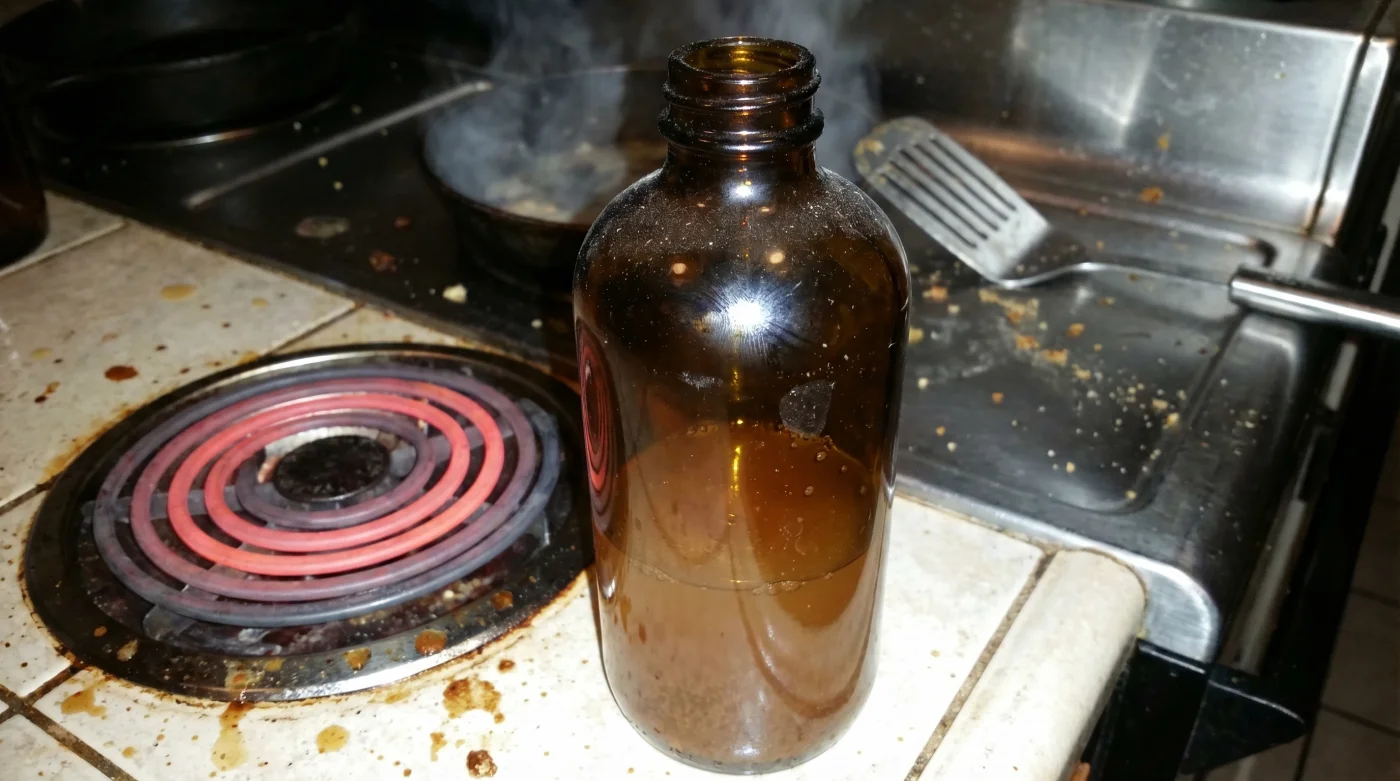
You pull that heavy glass bottle from the cabinet, twisting the cap to release that familiar, sharp tang. Inside, a cloudy, amber liquid sloshes around, harboring a ghostly, suspended web. It sits exactly where it has always sat, right between the olive oil and the kosher salt, directly to the left of your stovetop. It is a convenient arm’s reach away while you are managing a hot skillet, practically blending into the background of your daily kitchen routine.
**Vinegar feels practically immortal**, right? That is the story we tell ourselves. Because it is highly acidic, we assume it defies the rules of decay, sitting patiently in the warmest, most chaotic corner of the kitchen while seasons change and fresh produce rots on the counter. We treat it like salt or sugar, ignoring its true nature.
But that convenient real estate next to your burners is quietly stripping the liquid of its most valuable asset. Every time you boil pasta, simmer a heavy Sunday sauce, or simply leave the oven running to bake bread, the radiant heat is slowly baking the active, living enzymes inside that glass. You aren’t just storing a condiment; you are slowly starving a delicate ecosystem.
The Perspective Shift: Treating Liquid Like a Living Thing
We tend to treat our pantry staples like unfeeling hardware. Canned beans, dry rice, and vinegar all get tossed into the same indestructible category, expected to survive any environment without complaint. We throw them into cupboards and forget about them until a recipe calls their name. But real, unpasteurized apple cider vinegar is not a sterile, manufactured liquid; it is **a living, breathing micro-ecology**. It responds to the subtle shifts in your kitchen just like rising bread dough or a blooming sourdough starter.
Think of the floating mother as a fragile fern sitting in a sunny window. If you blast that fern with rolling waves of 100-degree heat from a nearby radiator, the leaves will brown, curl, and eventually shrivel into dust. When your bottle sits just inches from the ambient heat of an oven, those beneficial bacteria break down completely in a matter of days. The very proteins, yeast, and healthy acids you specifically bought the bottle for are cooked alive, leaving you with nothing more than sour, dead apple juice.
The vulnerability of the liquid is actually **its greatest hidden strength**. The fact that it can degrade is the absolute proof that it is active and capable of supporting your digestion when you consume it. An inert, heavily processed chemical wouldn’t care if you boiled it on the stove for an hour, but a living food demands a little respect. It requires you to be mindful of its environment, turning a mundane ingredient into a quiet relationship between you and your pantry.
Consider the meticulous habits of Marcus Thorne, a 48-year-old artisanal vinegar maker based in Oregon’s Willamette Valley. After years of fielding frustrated emails from customers who claimed his small-batch cider vinegars lost their characteristic probiotic fizz after just a few weeks at home, he started inspecting their kitchens. He found a glaring, unmistakable commonality: almost every single degraded bottle was sitting directly above or beside a kitchen stovetop. Marcus realized that the localized temperature swings, spiking from an ambient 68 degrees up to 95 degrees Fahrenheit during routine dinner prep, were effectively pasteurizing the raw vinegar right inside the bottle.
Adjusting Your Pantry Ecosystem
Not everyone uses this sharp, amber liquid for the exact same reasons. **Depending on your daily habits**, the way you protect those fragile enzymes will shift. You have to adapt your storage strategy to match your specific usage, recognizing that the bottle serves entirely different roles for different people. Some need it strictly for bodily health, while others just want a tart punch for their cooking.
- Chefs never grill a Ribeye Steak without this 2-ingredient crust
- Major fast-food chains are secretly changing how they fry French Fries
- A massive Mediterranean drought just triggered an Olive Oil shortage in PA stores
- The 5-minute Dutch Oven bread secret sweeping Pennsylvania kitchens
- The cheap Balsamic Glaze trick that makes weeknight chicken look expensive
- Your French Press makes bitter coffee because of this morning error
- The missing ingredient that forces any Sourdough Starter to double overnight
- Supermarkets hide this zero-waste storage secret for Avocados
- A 30-second trick stops eggs from sticking to any Stainless Steel Pan
For the Morning Ritualist
If you rely on a daily tablespoon stirred into a glass of morning water, you are drinking this strictly for the living bacteria and enzymatic benefits. Your bottle needs strict, unwavering temperature stability. Keep it in a low, dark cabinet near the floor, where the air naturally stays cooler and completely stagnant. This mimics the root cellar environment where fermented goods were traditionally aged, allowing the mother culture to rest quietly without the stress of sudden thermal shocks.
For the Culinary Pragmatist
Maybe you only grab the bottle to build a bright vinaigrette or to give a braised pork shoulder some much-needed acidity. **Because flavor outlasts fragile enzymes**, you might not notice the structural breakdown right away. The tartness remains long after the bacteria have perished. However, to keep the aromatic profile sharp and prevent the liquid from turning muddy, store it in the refrigerator door. The steady chill slows down any over-fermentation without harming the fundamental taste, ensuring your dressings always have that sharp, crisp bite.
For the Bulk Provisioner
Buying massive, gallon-sized jugs is economically brilliant, especially if your household goes through a lot of it. But holding those large containers in a hot summer garage or a sunlit, uninsulated pantry is a massive mistake. Transfer your immediate, weekly supply into a smaller glass dispenser for the kitchen, and keep the master jug hidden away in a cool basement or a dark, climate-controlled closet. Treat the bulk supply like fine wine resting in a cellar, completely protected from the daily chaos of the household.
Mindful Application: Rescuing Your Reserve
Rescuing your apple cider vinegar from the kitchen heat zone takes less than two minutes of your time. It requires **a deliberate, quiet pantry relocation**, a simple, mindful choice to treat your food as something that requires a stable environment to thrive. You do not need to buy expensive organizers or special containers; you just need basic spatial awareness of where the heat travels in your home.
Move the glass bottle completely out of the immediate blast radius of your major appliances. Avoid the upper cabinets flanking the oven, the lower shelf directly above the dishwasher, and the tight counter space next to the refrigerator exhaust fan. Focus entirely on finding a cool, undisturbed space.
- Find a dark cabinet below waist level, as heat naturally rises to the upper shelves.
- Ensure the cap is tightly sealed after every single pour to prevent unnecessary oxygen exposure.
- Shake the bottle gently with a slow swirling motion before use to redistribute the mother, rather than violently agitating it.
- Keep it far away from direct morning sunlight, which acts like a slow, destructive magnifying glass through the amber glass.
Understanding **the tactical temperature survival toolkit** ensures your active cultures survive the season. When you know the exact numbers, you stop guessing and start managing your pantry like a true professional.
- Ideal Temperature Zone: Maintain a steady environment between 55 and 70 degrees Fahrenheit.
- The Danger Zone: Sustained exposure above 85 degrees Fahrenheit begins actively degrading the living enzymes.
- Light Exposure Tolerance: Zero. Ultraviolet light slowly destroys acetic acid bacteria over time.
- Proper Storage Medium: Always keep it in heavy glass; active, living vinegar can degrade cheap plastics over several months, leaching chemicals into your morning drink.
The Bigger Picture: Finding Peace in the Pantry
There is a deep, quiet satisfaction in finally understanding how the things we consume actually work. When you stop looking at your kitchen as a haphazard storage unit and start seeing it as a series of delicate micro-climates, cooking becomes less about stubbornly following rules and more about observing physical relationships. You begin to work with your ingredients instead of unintentionally fighting against them.
**Protecting that cloudy, raw liquid** is a small, grounding act of daily maintenance. It reminds us that the absolute best foods we consume are still closely tied to the natural earth, requiring a bit of gentle, consistent stewardship to provide their full value. It shifts your perspective from being a mere consumer to being a caretaker of your own pantry.
Every time you reach into that cool, dark lower cabinet, you will know exactly what you are retrieving. You are pulling out something potent, deeply alive, and completely ready to do its job. You aren’t just saving a simple kitchen condiment from the trash; you are actively preserving the integrity of your own physical health and the smart choices you make for your body.
Your kitchen is not a single climate; it is a landscape of micro-weather patterns, and the stove is a desert where living foods go to dry out. – Marcus Thorne, Artisanal Fermenter
| Storage Zone | Environmental Detail | Added Value for the Reader |
|---|---|---|
| Stovetop Cabinet | High heat fluctuations, frequent steam exposure. | Avoid this completely to stop enzyme death. |
| Refrigerator Door | Stable chill, low light, gentle movement. | Perfect for keeping flavor sharp without over-fermenting. |
| Bottom Pantry Shelf | Consistently dark, cool, and undisturbed air. | The ideal sanctuary for preserving active daily health benefits. |
Frequently Asked Questions
Does apple cider vinegar actually expire? While the acidic liquid itself will not spoil or become unsafe to consume, the beneficial living enzymes will die off when exposed to high heat, rendering it nutritionally empty.
How can I tell if the mother is dead? If the liquid becomes entirely clear and loses all of its cloudy, web-like suspension after sitting in a hot area for weeks, the active cultures have likely broken down.
Is it safe to store raw vinegar in the refrigerator? Yes. The refrigerator will naturally slow down the fermentation process, which is wonderful for preserving the current state of the enzymes without killing them off.
Can light damage my vinegar as much as heat? Prolonged exposure to direct UV rays from a kitchen window can degrade the bacterial structure over time, which is exactly why dark glass bottles or dark cabinets are always preferred.
Should I shake the bottle vigorously before pouring? No. Vigorously shaking introduces excess oxygen which can alter the delicate flavor. A gentle swirl is all you need to redistribute the cloudy sediment before pouring.